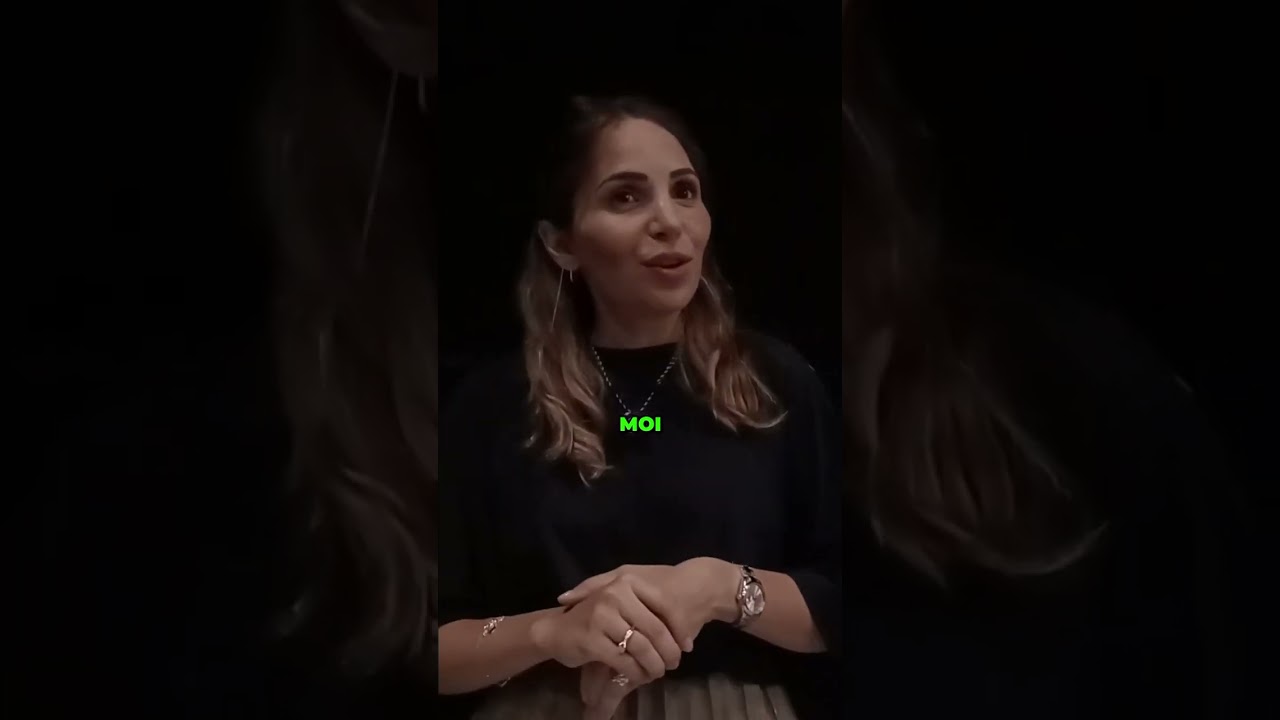
Béréchit : pourquoi la Torah parle-t-elle d’« acquisition » dans le mariage ? — Joy Galam
Paracha Mariage & Famille
Le Talmud décrit le mariage comme une acquisition, mais la richesse véritable réside dans la conquête quotidienne de l'amour, de l'attention et du cœur de l'autre. Le couple, par la confrontation respectueuse des idées, forge un regard objectif et enrichi sur le monde. #Mariage #ConquêteAmoureuse #RelationCouple #EnrichissementMutuel #KinyanHaTorah
Extrait du cours
Have you ever been moved to tears by a real estate transaction or a financial deal? You’ll tell me no. Well, imagine this: when we attend a wedding, where we are generally very moved, we are actually witnessing a transaction. The Talmud, in Kiddushin, tells us that the husband makes an acquisition, a " kinyan," of his wife. That seems surprising. Come, let’s look at this more closely. How does the Parashat Bereshit speak to us about the first marriage in human history? It begins with a feeling of fascination.
Transcription421 mots
Transcription automatique — peut contenir des erreurs.
Have you ever been moved to tears by a real estate transaction or a financial deal? You’ll tell me no. Well, imagine this: when we attend a wedding, where we are generally very moved, we are actually witnessing a transaction. The Talmud, in Kiddushin, tells us that the husband makes an acquisition, a " kinyan," of his wife.
That seems surprising. Come, let’s look at this more closely. How does the Parashat Bereshit speak to us about the first marriage in human history? It begins with a feeling of fascination.
When Adam sees Eve, he says, "Oh!""Oh, this time it’s the right one, she is extraordinary." A feeling of fascination, the Maharal tells us, which comes from what? From difference. She is different from him, and that is the reason she fascinates him so much. From this, we learn something extraordinary regarding the vocation of marriage.
The spouse is here to bring a difference, is here to bring a richness . Not to oppose for the sake of it, or to say that the other is wrong and they are right, but simply to have a confrontation of ideas with respect, harmony, and kindness. A confrontation of ideas where we might say that perhaps the other would benefit from seeing things differently. And it is by bringing our perspectives together, our two confrontations of ideas, that the Torah tells us we manage to detect the sparks in reality and build a perspective on the world that is objective.
Indeed, the Maharal tells us that this is the great richness of a couple, the great richness of marriage; it is that this very confrontation of ideas improves us, enriches us, and allows us to become better. So in reality, when marriage speaks to us of a "kinyan," I propose a new definition. Not to acquire a thing, but to conquer that thing. When a man marries a woman, the goal is to conquer her.
Conquer her whole life, conquer her love, conquer her attention, conquer her heart. And in the same way, the Torah speaks to us of "kinyan Torah," conquering the Torah . I cannot conquer the Torah; it is infinite. Well, precisely, it is the same idea; as in marriage, love is to be conquered every day.
In other words, marriage has nothing to do with an acquisition as such, but it is the culmination of a desire to be enriched, improved, and completed by one's alter ego. And so, it's no wonder that wedding ceremonies move us to tears.