הדרך הישרה - מנוחת הדעת בימות המשיח
Moussar Kabbala & Spiritualité
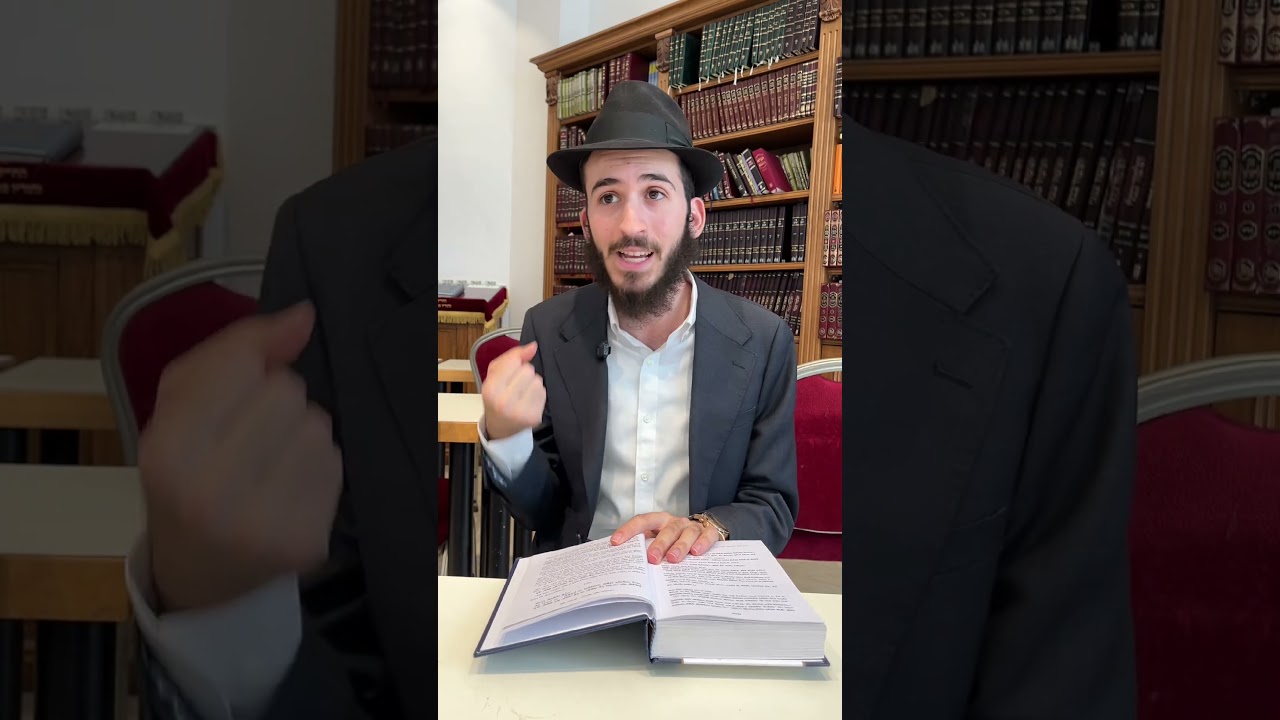
לימוד בספר הדרך הישרה - לימוד יומי בענייני גאולה ומשיח, ר׳ דוד מאיר וקנין חי מרחשוון, תשפ״ז
Extrait du cours
>> Good, may we live, our master, teacher, and rabbi, King Messiah, forever and ever. A lesson on the matters of Redemption and Messiah, with the help of God, a preparation for the holy Shabbat. We have a camera here, so, one of the prophecies regarding...one of the main things written about the true and complete Redemption is not, as the Rambam writes: The Sages and Prophets did not long for the days of the Messiah in order to rule over the whole world, nor to dominate the nations, nor
Transcription1583 mots
Transcription automatique — peut contenir des erreurs.
Go ahead. >> Good, may we live, our master, teacher, and rabbi, King Messiah, forever and ever. A lesson on the matters of Redemption and Messiah, with the help of God, a preparation for the holy Shabbat. We have a camera here, so, one of the prophecies regarding...one of the main things written about the true and complete Redemption is not, as the Rambam writes: The Sages and Prophets did not long for the days of the Messiah in order to rule over the whole world, nor to dominate the nations, nor to be exalted by the peoples, nor to eat and drink and rejoice, but so that they would be free for Torah and its wisdom, without anyone to oppress or distract them, so that they may merit the World to Come.
Yes, what does this tell us? That essentially, the reason the Children of Israel always waited for the days of the Messiah was not for the...only the physical things one receives from it, but the reason the Children of Israel always waited for the days of the Messiah was for that time when they would be free to engage in Torah, its commandments, and its wisdom...out of peace and tranquility of mind. Yes, the whole prophecy of the Redemption is that the Children of Israel will take all their physical occupations away and remain free to engage in Torah. So the Rambam writes that this is the expectation of the people of Israel for the Redemption.
What is the expectation of the people of Israel for the Redemption? That they will be free so they can serve God with rest and broad-mindedness, without problems. It comes up here in a talk from 5743, the Rebbe, King Messiah, interprets the matter this way: When a Jew is at such a level that Torah study becomes his nature and his habit, then that is the matter of "backbreaking labor"(avodat perech) for him, which expresses itself in the very work; that he does not have the ability to study Torah for the entire day truly, and the like—meaning, from his own nature and desire, [he wants] to study Torah all day long. Truly the entire day.
While the Torah's command, "and God will bless you in all that you do," forces him to dedicate an hour of the day to his livelihood needs. And in the same way, it applies to all his body's needs : eating and drinking, sleeping and resting, and the like, which he does only out of necessity, since the Torah commands him to maintain the health of his body. Yes. And by his own nature, what does he actually want the most?
He wants to engage in Torah all day, to sit, to learn, to engage in Torah and fulfill commandments. So what is the " backbreaking labor" of a true Jew? The "backbreaking labor" of a true Jew is not the work he does day-to-day, but the very fact that he could be sitting and studying Torah in those moments and fulfilling commandments, but instead, he must engage in other things to earn a living. Yes.
Now the Rebbe comes here and says it's not that his going out now in our time to earn a living is something forbidden or bad; it is a positive thing. A person needs to bring what is called...a person needs to live , needs to bring a livelihood home, needs to...uh... >> Abundance. >> Yes, but the very fact that he must deal with that and not deal with fulfilling the Torah and commandments and spirituality, that for a Jew is " backbreaking labor." Yes.
>> What is "backbreaking labor," the studying or the opposite? He says that "backbreaking labor" is actually the very fact that he cannot engage in study. >> It breaks him. >> It kills him, yes.
>> True. >> He says this is a definition of slave labor, why are you actually doing something that you are, in fact, working. >> But if he causes other people to study, like Issachar and Zebulun, where this one provides for the livelihood and that one focuses on the learning. >> No, that's excellent, in our time it's excellent, but he says that perfection.
>> Ah, Moshiach. >> Perfection will be in the days of Moshiach, because in the days of Moshiach, one won't actually need to deal with material things. >> You won't need money. >> Yes, it will be in a way where everything will be with peace of mind.
It is written that in the days of Moshiach, every person who was meticulous about the mitzvah of tzitzit —even a person who wasn't meticulous will have a certain amount—but especially a person who was meticulous about the mitzvah of tzitzit, it says he will have 800 slaves for every fringe, 2,800. >> Slaves are like fathers, slaves are like fathers. >> You will have slaves who manage the slaves, that is why there are so many, you'll open companies, everything will be organized, no, without salaries. >> Everything will be.
>> Without salaries and without pensions and without that, it's fine. >> Without pensions and without worry, everything will be calm. >> Slavery is worse. >> Yes, true, no, if you open a company, that's the point, because it's the days of Moshiach, it's not like you keep employees like today, it will be in a way of, ah yes, everything will be in a state of tranquility so that a person can really sit and engage in Torah and mitzvot.
>> So if he has so much and he doesn't need materialism, then what does he need slaves for? What will the slaves do? >> The slaves will take care of the materialism, there will be materialism in the first period of the days of Moshiach. >> There will be slaves, slaves are gentiles.
>> Gentiles, yes. >> The gentiles will work, as it says, yes . " >> Nations will serve you."" >> Nations will serve you." >> With the help of Hashem, as the Rambam wrote in the Laws of Kings, the Sages and Prophets and all of Israel did not yearn for the days of Moshiach to rule over the whole world, nor to eat, drink , and rejoice, but so that they would be free for Torah and its wisdom. >> Lovely.
>> So that they can rest from the kingdoms . >> Yes. >> That's very nice. >> Or no, they don't have the mitzvot of Jews, they need to receive reward for the work.
>> True, but in the days of Moshiach they will want, of their own accord, to serve the Jew; that will be their purpose, their reward for those who kept the seven Noahide laws. >> What actually happens in the days of Moshiach? All the concealment and hiddenness of the world is revealed. The moment all the concealment and hiddenness of the world is revealed, what do all the nations of the world actually see?
That the people of Israel are the chosen people. The people for whom, so to speak, this whole world was created. Everything that exists here is for Israel. That is the reality of the world.
And therefore, meaning, when this concealment and hiddenness drops, then basically a gentile will want to serve the Jew. Meaning it won't be for him in a way where he is being forced. >> He simply, it is. He will understand that this is why he, this is his nature , that is why he was born.
Do you understand? Yes. He simply says, more than that, also so they rest from the kingdoms, that it won't be kingdoms to engage in Torah and mitzvot properly and people will grow in wisdom. Yes, one of the prophecies is also that the kingdoms that actually interfere with studying Torah and keeping mitzvot will give them rest, peace of mind, they will give the people of Israel rest, and they will be able to engage in Torah.
Yes. >> Iranians for example. >> For example, the Iranians, may their names be blotted out, and the Assyrians , and all the nations, indeed. And that is why a Jew cries out to the Holy One, Blessed be He: How long?
Until when will one be forced to engage and deal with the affairs of the world? A person may plow during plowing time and sow during sowing time, the Torah teaches regarding it and what is needed: "Your garden and your field," and so on. Let the Holy One, Blessed be He, bring the redemption, as it is written: "And strangers shall stand and feed your flocks." Yes, so therefore a Jew actually asks the Holy One, Blessed be He: Until when? Why?
Because the true desire of a Jew is actually to serve Hashem with peace of mind. He does not want to deal with the affairs of the world, and if a Jew does not want to deal with the affairs of the world. Then he arrives and cries out "until when," that the redemption should already come, and I will have peace of mind, and I will be able to engage only in the fulfillment of the Torah and mitzvot, with Hashem's help, that we should merit for this to be immediately and truly. >> Long live our Master, our Teacher, and our Rabbi, King Messiah, forever and ever.
>> Amen, Amen, for the teaching.