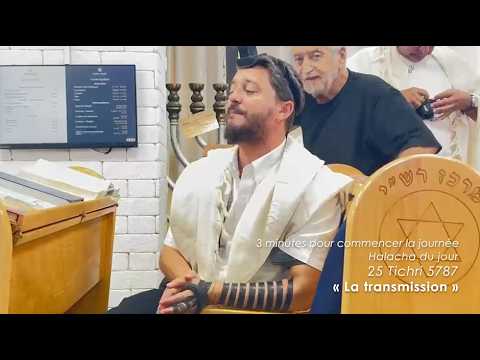
Daf hayomi ZEVAHIM page 117
Daf Hayomi
Abonnez-vous à la chaîne YouTube du Centre Rachi pour rester informé des derniers contenus originaux. Rejoignez-nous sur notre groupe facebook : https://www.facebook.com/groups/712826445437581/ Visitez le site du Centre Rachi : http://www.centrerachi.com/ Devenez le parrain de nos activités pour continuer le développement de nos projets Torah et faire grandir toujours le nom de D… Merci à vous et que Hashem puisse vous le rendre dans le domaine que vous désirez ! http://www.centrerachi.com/index.php/dons/
Extrait du cours
That's exactly it, it's a bit lighter. So, we are in line 30. We saw that it could be eaten everywhere, even in the desert, even in Jerusalem, the right neighborhood, but not the temple, we could eat them. in the desert the tabernacle boils so it also surrounds the women's court, we call it in the temple the place where the women could come But we were there, there was no trans. There wasn't anything but which one ? Try to understand. You're telling me that in Chilo there were only two camps and not three. Which Janqué camp?
Transcription613 mots
Transcription automatique — peut contenir des erreurs.
a little more friendly. That's exactly it, it's a bit lighter. So, we are in line 30. We saw that it could be eaten everywhere, even in the desert, even in Jerusalem, the right neighborhood, but not the temple, we could eat them.
in the desert the tabernacle boils so it also surrounds the women's court, we call it in the temple the place where the women could come But we were there, there was no trans. There wasn't anything but which one ? Try to understand. You're telling me that in Chilo there were only two camps and not three.
Which Janqué camp? And the impossible steps, you have to have a place that is pure, whereas Israel where they go and there the loulata was the cities of Levi. In nearby Chilo, there was no refuge for someone who had accidentally killed someone; he had to go there. Yeah.
Yeah. In the beginning, there were three and three three. Three on the other side of the Jordan and three in Israel. But then we also add the 48 cities of the LV.
These are cities of refuge. That's what happened in the desert. If there was an accident and someone killed someone, he will go to Levi's camp. Alright.
If it's an LV who's had an accident, who's injured someone, where will he go? If he is in the city of refuge, he will go to one of the other 48 cities of refuge, but not his own. Deè av who says no, he can stay in the same city. Now there in the michnado, we saw the tabernac uh folded packed where they went up in the guilgal and there we had the right to make sacrifices everywhere colidar venida bama not everyone could get there so those who wanted to make donations at home sacrifices at home could do it real rair even if someone had finished their nazir the procedure after a month then they could do it at home.
Rab no no no pardon Rab said yes no that holocausts and desam passed there so the tabernacle first station after entering Israel Gilgal desert and the new tabernacle as the people they start to go despite there are wars and all but we do not have the Torah it did not oblige them to sacrifice among certain categories the only sacrifice allowed outside Gilgal is I turn page 117 that the people here who were there they make idolatrous sacrifices everywhere so we cannot copy it now they do
not agree they say no for them it was idolatry. We used to make sacrifices for a provisional God, we understand the debate now, if someone has made a sacrifice at home and in the chest and thigh it is for the Kohen. Should he give them or not? It depends if it was a big hotel he built, a big event, a big sacrifice or a small family sacrifice.
But the expiatory acts, all that is forgiven, the sins never at home, always in the temple. So, well done, donations and thanks were allowed, not just in the tabernacle. I'm turning to page 118. We're going to make a new video right away.
Even public sacrifices, if it's a place not at home in a city roundabout, they've done something impressive, it's allowed. Even if there were no foreigners, I would have thought that if there were no more, because it was them before the cohit and the tabarnac at Gilgal, it was the offerings that were added and the oblation, they had added what they did in the desert. Vo la rabotaille la page 118 117